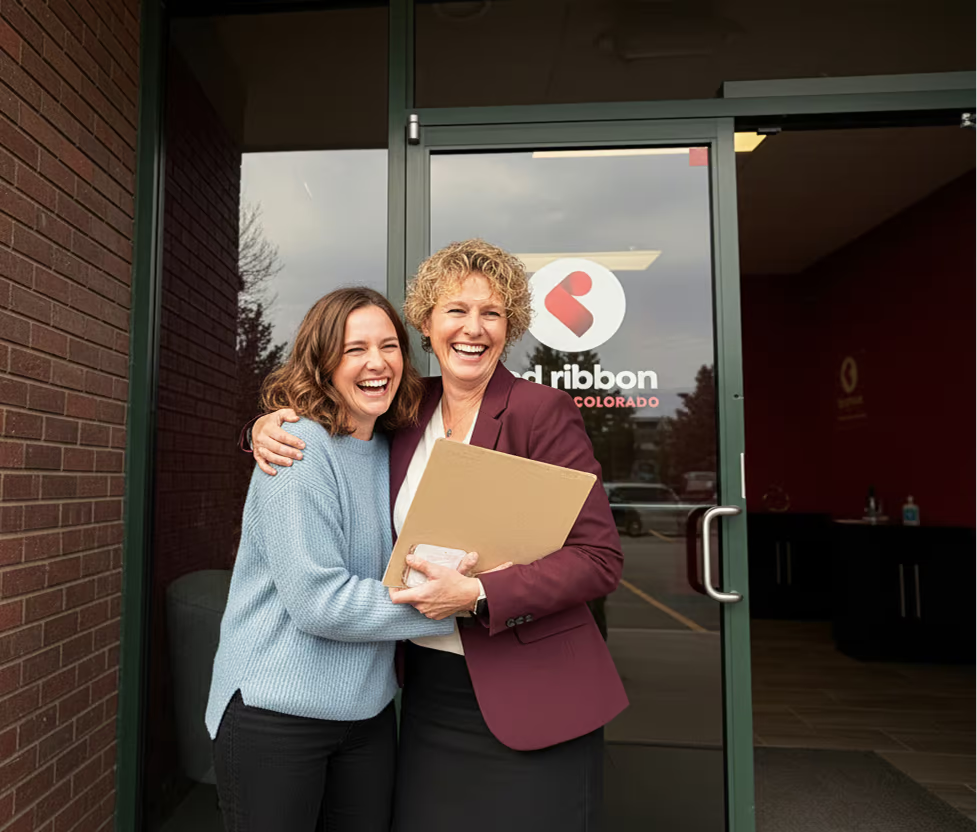


Do interventions work? They can, but how well depends on how the intervention is done. Surprise confrontations often end with the person refusing help or feeling ambushed. Approaches that coach families to communicate calmly and set consistent boundaries tend to get better results. If someone you care about in Colorado is struggling with substance use, careful planning and a clear next step give you the best chance of a yes. At Red Ribbon Recovery Colorado, that next step can be an outpatient treatment plan that’s ready before the conversation begins, so your loved one can start getting help while still living at home.
What is an addiction intervention?
An addiction intervention is a planned, structured conversation designed to connect a person with a substance use disorder to appropriate medical or clinical care. Do interventions work? Yes, when properly organized, they offer a clear pathway to help while establishing healthy family boundaries. Popular television shows often portray interventions as dramatic, tearful surprise attacks. Clinical reality is far more compassionate. The true goal is not to shame the individual or force a confession. It is to present a unified, supportive front that clearly outlines treatment options and the boundaries family members will maintain going forward.
Red Ribbon Recovery Colorado treats addiction as a chronic health condition deserving the same supportive community response as any other medical issue. Our approach emphasizes empathy over anger. By focusing on practical steps, family members can guide their loved ones toward a higher level of care. You might contrast the confrontational TV models with real clinical support, such as structured dual diagnosis treatment options. These programs address both the substance use and any underlying mental health factors. Interventions also involve setting immediate goals, such as transferring the individual directly to a drug and alcohol detox program for medical stabilization. When families integrate professional support, the conversation shifts from past mistakes to a healthier future.
Do interventions actually work?
Interventions successfully motivate individuals to enter treatment in many cases, though exact success rates vary based on the approach and professional involvement. Do interventions actually work? The National Council on Alcoholism and Drug Dependence (NCADD) reports that over 90 percent of people agree to seek addiction treatment when an intervention is guided by a trained professional. Some professional interventionists report short-term success rates between 80 percent and 90 percent when care is arranged immediately.
However, clinical reviews offer a more nuanced view. Formal studies proving the long-term effectiveness of one-off, surprise interventions remain mixed. Securing a same-day agreement to enter inpatient treatment is only the first step. According to the National Institute on Drug Abuse, sustained recovery requires addressing both the substance use and the person’s unique psychological needs. True success also includes changing the family system. This means setting healthy boundaries, stopping enabling behaviors, and opening the door to ongoing professional evaluations. Because an intervention is not a cure, long-term recovery depends heavily on sustained family support and evidence-based clinical care.
Different types of interventions and what they include
The process depends entirely on the specific intervention model you and your mental health professional choose to use. There is no single correct way to help someone enter treatment. Some families benefit from a highly structured meeting, while others need a more gradual, skills-based approach.
| Intervention model | Core approach | Best used for |
|---|---|---|
| Johnson model | A planned family meeting outlining specific behaviors and consequences. | Situations requiring immediate boundaries and rapid treatment entry. |
| CRAFT (Community Reinforcement and Family Training) | Families learn positive communication and boundary-setting over time. | Reluctant individuals and families wanting to reduce enabling safely. |
| ARISE model | A graduated, invitational process involving the broader social network. | Preserving family relationships while escalating structure only if needed. |
| Systemic family model | Treating the entire family dynamic, communication, and stress factors. | Healing the household system alongside the individual’s recovery. |
A family should choose a model based on their specific situation, safety needs, and their loved one’s temperament. The traditional Johnson Model remains popular, but a Substance Abuse and Mental Health Services Administration protocol often favors systemic approaches.
For instance, a Systemic family model works well when the entire household requires healing. Integrating family therapy into the process ensures that everyone learns healthier communication. If your loved one is hesitant about residential care, exploring a partial hospitalization program during the intervention can make treatment feel more approachable.
What improves the success rate of an intervention?
Thorough preparation and a calm, non-judgmental environment significantly improve the likelihood that a person will accept help during an intervention. They work most frequently when families move away from emotional outbursts and rely on structured, clinical guidance. Success relies heavily on removing practical barriers before the conversation even begins.
When organizing an intervention, follow these essential preparation steps:
- Careful planning. Gather factual information about the person’s substance use without relying on rumors or assumptions.
- Maintaining a steady tone. Keep the conversation focused on care and objective observations rather than anger or blame.
- Utilizing a neutral location. Choose a private, safe space where the person feels respected and less defensive.
- Securing treatment options in advance. Have a specific, confirmed intake plan ready that exact day.
Redefining a good success rate means looking beyond a simple same-day yes. Success also includes setting healthy boundaries, stopping enabling behaviors, and protecting the household’s well-being.
Seeking professional support for interventions
A professional interventionist manages the emotional temperature of the room and keeps the dialogue focused on recovery. Working with trained addiction specialists mitigates the risk of emotional blow-ups that can derail the process. A mental health professional understands how to navigate complex family dynamics safely. Having an expert present ensures that if the individual agrees to help, the transition into care happens smoothly and immediately.
Risks and alternatives to surprise interventions
Classic surprise interventions carry significant psychological risks, including triggering anger, deep resistance, or permanently damaged relationships. A sudden group confrontation can make a person feel exposed, cornered, and morally judged. This intense shame often backfires. The person may deny the problem completely, leave the room abruptly, or sever contact with the family members who organized the ambush. In cases involving severe mental health symptoms, trauma, or a history of violence, a surprise confrontation can escalate into a genuinely dangerous situation.
Safer alternatives focus on professional guidance and boundary-setting without relying on coercion. The Community Reinforcement and Family Training (CRAFT) model offers a highly effective alternative. CRAFT teaches families positive communication, safe boundary-setting, and how to reinforce sober behaviors naturally. Research shows that CRAFT often achieves higher treatment engagement rates than traditional surprise interventions. By removing manipulation and secrecy, CRAFT empowers families to improve their own well-being while making treatment a more attractive choice for their loved one.
What happens after your loved one says yes
An intervention is only as effective as the treatment that follows it. The hours and days after a loved one agrees to get help are when commitment is most fragile, so a smooth, fast transition into care matters as much as the conversation itself. Families who know what to expect after the yes are better prepared to support the next step without second-guessing it.
Moving from agreement to admission
The best time to begin treatment is as soon as possible after the intervention. Delays give doubt, cravings, and old excuses time to take hold. Before the conversation, confirm an intake time, verify insurance benefits, and arrange transportation so your loved one can go straight from agreement to admission. If medical stabilization is needed first, the clinical team can help coordinate that step before outpatient care begins.
Choosing the right level of outpatient care
Not everyone needs the same amount of structure. A partial hospitalization program offers full days of clinical care while your loved one returns home each evening. An intensive outpatient program provides several sessions each week, allowing people to keep up with work, school, or family responsibilities. Standard outpatient care offers ongoing therapy as stability builds. Many people move through these levels gradually, stepping down as they gain confidence and coping skills.
Supporting recovery at home
Your role does not end once treatment starts. Keep the boundaries you set during the intervention, avoid rescuing your loved one from natural consequences, and recognize progress when you see it. Family therapy gives everyone a space to rebuild trust and practice healthier communication. Taking care of your own well-being, whether through counseling or a family support group, helps you stay steady for the long haul.
Planning for long-term recovery
Recovery continues well after formal treatment ends. Aftercare planning, relapse prevention strategies, and ongoing peer support help protect the progress made in treatment. Setbacks can happen, and they do not mean the intervention failed. A strong plan and a supportive family make it easier for your loved one to return to care quickly and keep moving forward.
A steady way forward with Red Ribbon Recovery Colorado
Navigating a substance use disorder requires a clear plan, professional guidance, and strong boundaries that protect the entire household. By understanding the different intervention models available, you can choose an approach that prioritizes medical safety and respectful communication over unnecessary conflict.
If you are preparing to help someone transition into clinical care, Red Ribbon Recovery provides the structured medical and therapeutic support necessary for a safe admission. Reach out to our admissions team at (303) 219-3980 to discuss your family’s specific situation, verify your insurance coverage, and secure a treatment placement. Taking organized, professional action today provides the most reliable pathway to evidence-based health care. Contact us now.
Sources
- National Institute on Drug Abuse. (2014). Prevention. National Institute on Drug Abuse.
- National Institute on Drug Abuse. (2025). Treatment. National Institute on Drug Abuse.
- Substance Abuse and Mental Health Services Administration. (2024). SBIRT: Screening, Brief Intervention, and Referral to Treatment. Substance Abuse and Mental Health Services Administration.
- National Institute on Drug Abuse. (n.d.). Principles of Drug Addiction Treatment: A Research-Based Guide. National Institute on Drug Abuse.
- Substance Abuse and Mental Health Services Administration. (n.d.). The Importance of Family Therapy. Substance Abuse and Mental Health Services Administration.
- National Institute on Alcohol Abuse and Alcoholism. (n.d.). Treatment for Alcohol Problems: Finding and Getting Help. National Institute on Alcohol Abuse and Alcoholism.
- Behavioral Health Administration. (n.d.). Opioid Treatment Programs. Behavioral Health Administration.