

Addiction stigma stops too many people from getting the help they need and deserve. The good news is that stigma addiction and recovery can be addressed together through compassionate, evidence-based treatment that treats the whole person. The weight of shame, fear, and judgment about addiction, both from others and from within, can feel like a heavy chain, holding you back from seeking the help you deserve. This is the power of stigma, and it’s one of the biggest, most painful barriers people face on the path to recovery. You are not alone, and what you’re going through is not a moral failing. Addiction is a treatable medical condition, and breaking free from its grip is possible.
Stigma addiction and evidence-based treatment
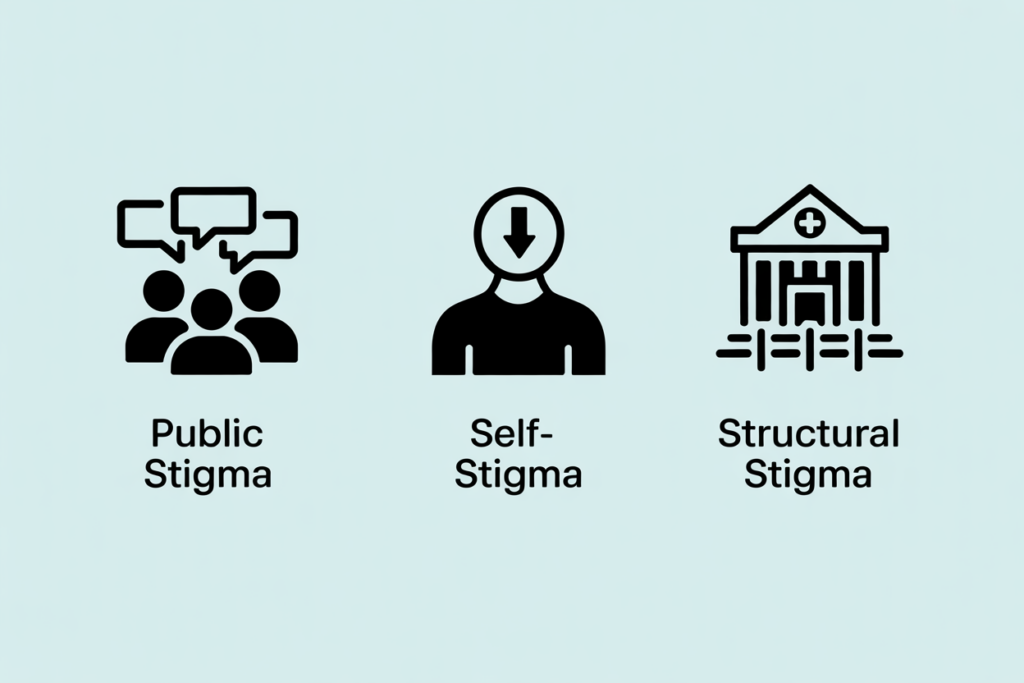
Addiction stigma, including public stigma, self stigma, and structural stigma, poses an enormous challenge to help-seeking and treatment availability. Stigmatizing language like “drug addict” or “substance abuser” reinforces negative stereotypes and negative attitudes that discourage people from reaching out. The Substance Abuse and Mental Health Services Administration and the National Institute on Drug Abuse both emphasize that person-first language, such as “person with a substance use disorder,” reduces stigma meaningfully. Our team is committed to reducing disorder stigma and treating patients with dignity, supporting long-term recovery from drug and alcohol addiction, including various types of addiction treatment.
The three types of stigma
Stigma isn’t just one single thing; it operates on different levels, creating a complex web of challenges that can feel impossible to escape. Think of it as having layers, each one affecting a person’s life in a different way.
Public stigma
Public stigma refers to the negative attitudes and stereotypes that a society or community holds against people with substance use disorders. It’s the collective judgment that leads to social rejection and discrimination.
This can show up in many ways, from derogatory language used in everyday conversations to media portrayals that paint individuals as dangerous or morally corrupt. These harmful stereotypes aren’t just words; they create a social environment where people feel isolated and devalued, making it harder to maintain relationships, find support within their communities, or simply feel accepted for who they are.
Self stigma
Perhaps the most insidious form of stigma is self stigma. This happens when a person internalizes the negative messages from public stigma and starts to believe them about themselves.
It’s the voice of shame, guilt, and self-blame that whispers you’re not worthy of help or that you don’t deserve to get better. This crushing weight on a person’s self-esteem can be a massive barrier to seeking treatment. When you believe you are fundamentally flawed, reaching out for help feels impossible.
You might hide your struggles out of secrecy and fear, convinced that you are alone in your battle when, in reality, compassionate help is available. Overcoming addiction shame and guilt is a critical part of the healing process.
Structural stigma
Structural stigma is when discriminatory attitudes are embedded into the very fabric of our institutions through policies, laws, and practices. It’s less about individual prejudice and more about systemic barriers that limit opportunities for people with substance use disorders.
This can look like difficulty finding stable housing because of a past conviction, being denied employment opportunities, or facing disparities in the criminal justice system. These policies can even exist within health care, creating obstacles to getting quality treatment. Structural stigma reinforces the idea that people in recovery are “less than,” making it incredibly challenging to rebuild a stable, fulfilling life.
Factors that influence stigma
The stigma surrounding addiction doesn’t come from nowhere. It’s fed by a combination of factors that reinforce negative stereotypes and create a culture of fear and misunderstanding.
Media Portrayals
Think about how often you’ve seen a movie or news story where someone with a substance use disorder is shown as violent, unpredictable, or hopeless. Media portrayals have a massive impact on public perception, and unfortunately, they often get it wrong.
Race, ethnicity, and culture
Stigma is often made worse by racial and cultural biases that have been woven into our society for generations. Historically, drug laws and enforcement have disproportionately targeted communities of color, leading to much harsher legal consequences and greater barriers to care.
Consequences of stigma
The consequences of stigma are not just hurt feelings; they are real-world barriers that can have devastating impacts on a person’s life. When society treats addiction as a character flaw instead of a health crisis, it creates an environment of fear and discrimination that affects everything from personal relationships to professional opportunities. It pushes people into the shadows, making it harder for them to access the life-saving care they need and deserve.
Tackling stigma matters because it is, quite literally, a matter of life and death. It prevents people from seeking help, isolates them from their communities, and perpetuates a cycle of shame that can feel impossible to break.

This discrimination seeps into every corner of life. People with a history of substance use often face immense challenges finding stable housing and securing steady employment. The fear of judgment from health care providers can also prevent individuals from being honest about their substance use, which can lead to poorer quality of care.
Stigma can cause social isolation, as friendships and family bonds become strained by misunderstanding and blame. When someone is already struggling, these external pressures can make recovery feel even more out of reach.
If you are facing these challenges, please know that confidential and compassionate help is available. Contact us for a confidential assessment, and let us help you find a path forward, free from judgment.
Words to Use and Not Use
Language is powerful. The words we choose can either perpetuate harmful stereotypes or promote dignity and respect. Using person-first language is a simple but profound way to combat stigma. This approach puts the person before their condition, emphasizing their humanity rather than defining them by their illness.
For example, instead of calling someone an “addict,” we can say “a person with a substance use disorder.” This small shift helps separate the person from the disease and affirms that their condition is something they have, not who they are.
Adopting this practice is something we can all do to create a more supportive environment. According to the National Institute on Drug Abuse, the terms we use can either perpetuate or break down stigma.
Targets and interventions to address stigma addiction
The good news is that stigma is not permanent. It was built on misunderstanding, and it can be dismantled with education, empathy, and intentional action. The question, “How do we stop the stigma of addiction?” has answers that we can all be a part of.
Mental health treatment options
Cognitive behavioral therapy (CBT) is one of the most studied evidence-based treatments for drug addiction and mental health conditions. CBT helps patients challenge negative bias, punitive attitudes toward themselves, and harmful thought patterns that sustain active use.
DBT therapy addresses the emotional dysregulation that often drives substance use and self stigma in recovery. Dialectical behavior therapy teaches concrete skills for managing distress without turning to illicit drugs, prescription drugs, or alcohol.
Inpatient and outpatient treatment options
Inpatient treatment provides intensive, round-the-clock support for people with severe substance use disorder or co-occurring mental disorders. For patients who need residential treatment, we refer to trusted residential treatment center Colorado partners who deliver evidence-based treatment in a structured setting.
Our PHP Colorado is a high-intensity, structured level of mental health treatment and addiction care. A partial hospitalization program (PHP) offers several hours of therapy and medical treatment each day without requiring an overnight stay.
An intensive outpatient program Colorado (IOP) provides structured substance use treatment multiple days per week while allowing patients to live at home. The intensive outpatient program (IOP) includes mental health treatment, group therapy, and evidence-based treatment to support long-term recovery.
Take the first step toward treatment and recovery without the stigma
Addiction stigma, including public stigma, structural stigma, and self stigma, should never stand between a person and the help they need. Red Ribbon Recovery Colorado provides evidence-based treatment for drug addiction, alcohol use disorder, opioid use disorder, and co-occurring mental health conditions in a judgment-free environment.
Our mental health programs and therapy programs address the well-being of the whole person, from substance use treatment to mental health services to medication assisted treatment. Whether you are dealing with drug abuse, prescription medications, illicit drugs, or substance related conditions complicated by mental illness, our health care professionals are here to help.
Reach out today through our contact us page or call (303) 219-3980 to learn about treatment options and begin your path to long-term recovery.
Sources
- National Institute on Drug Abuse. (November 29, 2021). Words matter – terms to use and avoid when talking about addiction. National Institute on Drug Abuse.
- Substance Abuse and Mental Health Services Administration (SAMHSA). (July 28, 2025). SAMHSA releases annual national survey on drug use and health. SAMHSA.
- Centers for Disease Control and Prevention (CDC). (January 31, 2025). Stigma: beyond the numbers | stop overdose. CDC.
- U.S. Department of Labor. (n.d.). Addressing stigma. U.S. Department of Labor.
- Bureau of Justice Statistics. (October 1, 1995). Racial disparity in U.S. drug arrests. Bureau of Justice Statistics.
- National Institute on Drug Abuse. (June 7, 2022). Stigma and discrimination. National Institute on Drug Abuse.
- Harvard Health Publishing. (September 28, 2021). Poverty, homelessness, and social stigma make addiction more deadly. Harvard Health Publishing.
- Centers for Disease Control and Prevention (CDC). (June 9, 2025). Mental health stigma. CDC.
- Centers for Disease Control and Prevention (CDC). (August 5, 2025). CDC launches new campaign to address youth substance use and mental health. CDC.
- Substance Abuse and Mental Health Services Administration (SAMHSA). (December 30, 2024). Helplines: mental health, drug, alcohol issues. SAMHSA.
- Substance Abuse and Mental Health Services Administration (SAMHSA). (n.d.). FindTreatment.gov: Home. SAMHSA.