

At Red Ribbon Recovery Colorado, we understand that healing is not a one-size-fits-all approach. For individuals facing mental health challenges or substance abuse, traditional therapy may not be enough. This is where adventure therapy offers a powerful alternative, blending outdoor activities with mental health treatment for a transformative experience.
But what is adventure therapy, exactly? And how does it help people build confidence, navigate emotional challenges, and create real change?
Let’s explore the benefits of this approach, the types of activities involved, and how these programs create positive outcomes for people of all ages.
What is adventure therapy?
Adventure therapy is a type of experiential therapy. It uses physical challenges and outdoor activities to support emotional and psychological healing. This approach combines experiential education, group therapy, and behavioral skills training in a natural environment, often outside of a typical clinical setting.
Unlike traditional therapy, adventure therapy programs offer participants the chance to engage directly with their healing. Activities like rock climbing, hiking, ropes courses, and team exercises are designed to promote self-confidence, build new skills, and support overall mental well-being.
Adventure therapy can be adapted for different ages and needs. Adolescents may benefit from group activities that focus on teamwork and responsibility. Meanwhile, adults in recovery often find value in challenges that build resilience. By meeting participants where they are, this therapy offers a personalized experience that feels active and empowering.
How does adventure therapy work?
Adventure therapy centers on the idea that natural consequences, movement, and group dynamics can speed up the healing process. During sessions, a trained therapist guides participants through carefully planned adventure experiences while providing mental health support.
In a typical session, clients might:
- Work together in a group to finish outdoor challenges
- Address emotional hurdles with support from peers and a therapist
- Create new problem-solving and relapse prevention skills
- Achieve breakthroughs in self-concept, efficacy, and esteem
- Apply learned skills like trust and communication to daily life
Unlike traditional therapy, which reflects on past events, this approach involves processing experiences as they happen. The natural settings of mountains and forests act as a metaphor for real-life obstacles. A client who hesitates before climbing can work through anxiety in that moment. This immediate opportunity for growth creates stronger connections between therapeutic lessons and daily challenges like managing stress.
The science behind adventure-based therapy
Adventure and wilderness therapy are more than just spending time outside. They use the science of physical activity and experiential learning to create real improvement in emotional well-being. While traditional talk therapy focuses on reflection, a therapeutic adventure engages the body and mind to accelerate healing.
When clients participate in structured adventure activities, the body responds physiologically. Physical movement boosts endorphin production, which can elevate mood and reduce symptoms of depression. At the same time, engaging in challenges like hiking, climbing, or ropes courses helps lower cortisol levels, easing stress and anxiety. These shifts in the nervous system support better emotional regulation and improved focus—critical tools for those managing mental health issues.
On a psychological level, adventure therapy promotes skill development in problem-solving, teamwork, and communication. Overcoming outdoor challenges builds resilience and self-efficacy, which improves mental health outcomes. When participants process these experiences with a trained therapist, they learn to apply the lessons to their daily lives.
Types of adventure therapy activities in adventure therapy programs
Adventure therapy is a structured treatment that uses specific adventure experiences to promote healing and resilience. Each activity is designed with clinical goals in mind, supporting people with various mental health conditions. By blending physical challenges with guided reflection, clients can improve interpersonal skills and form stronger connections.
Ropes course therapy
Ropes courses are widely used in adventure therapy programs for both adolescents and young adults. These activities involve climbing, balance obstacles, and team challenges that require communication and trust. Participants often face their fears in the moment, learning to manage anxiety while relying on peer support. This process builds self-confidence and group unity.
Rock climbing
Rock climbing is a classic adventure therapy activity that combines physical challenge with emotional growth. Scaling a wall requires focus, persistence, and trust in equipment and partners. For individuals managing anxiety or depression, reaching the top is a symbolic breakthrough. The act of climbing also supports development in resilience and stress management.
Hiking and wilderness therapy
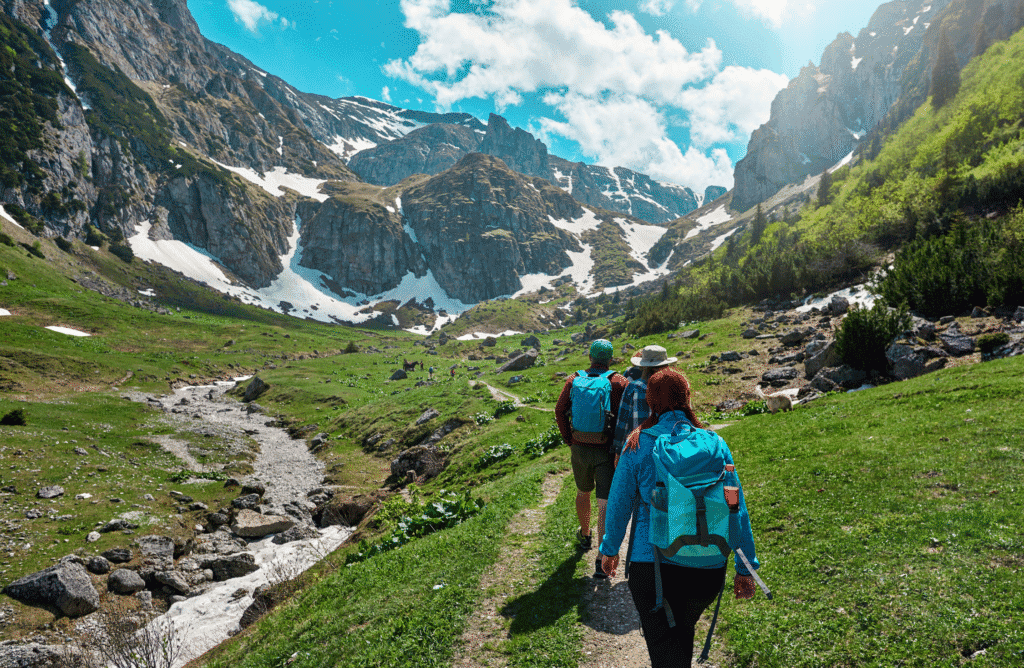
Hiking is one of the most accessible forms of adventure therapy. Guided hikes give participants a chance to disconnect from daily stressors and engage with nature. For those coping with trauma or other mental health issues, the rhythm of walking promotes mindfulness. Wilderness hikes often include group discussions and journaling, creating a space for connection and emotional processing.
Group adventure programming
Group-based adventure experiences are essential for building healthier relationships. These activities, like outdoor problem-solving games, help participants practice communication and leadership. For young adults or those who feel isolated, the group setting offers a valuable opportunity for connection. Learning to trust others and work as a team builds social confidence.
Outdoor survival skills
Learning survival skills, like building a fire or shelter, helps clients feel capable and resourceful. These activities are not just about practical knowledge; they encourage self-reliance and perseverance. For people working through addiction, survival tasks reinforce resilience and provide a sense of mastery that transfers to everyday challenges.
Water-based activities
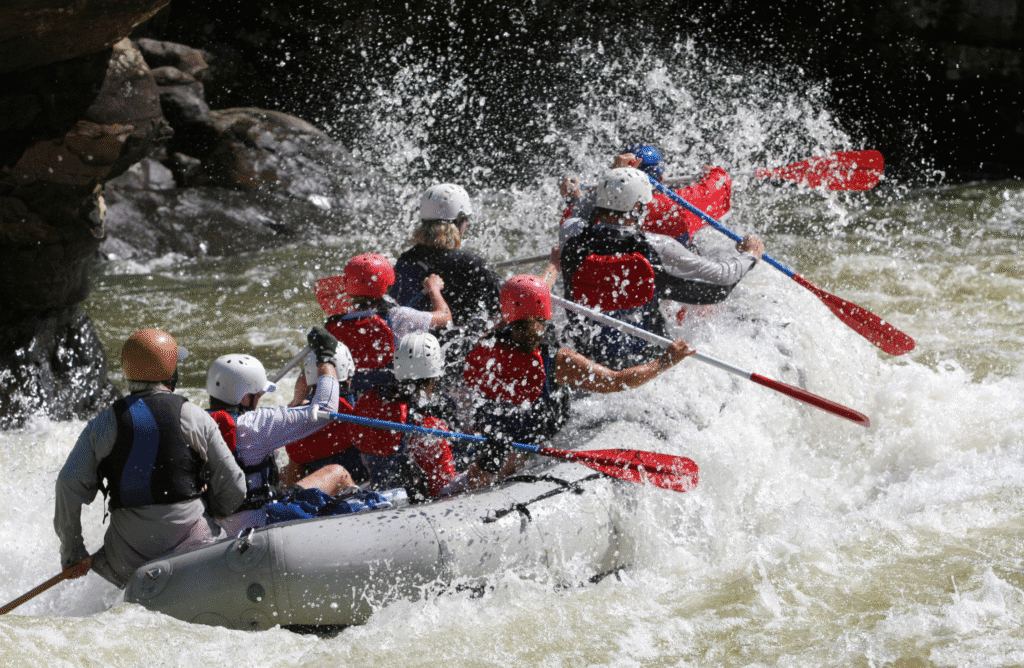
Kayaking, canoeing, and rafting are often included in adventure therapy programs. These activities combine relaxation with a challenge, requiring focus and coordination. Navigating a river helps participants learn to manage stress and uncertainty. Group water activities also encourage cooperation, which is key to building stronger interpersonal skills.
Mindfulness and reflection
Not all adventure therapy is physically hard. Many programs include quiet, reflective activities like yoga or journaling in outdoor settings. These practices help participants connect their adventure experiences to personal challenges. Mindfulness exercises are especially helpful for people managing anxiety or trauma, offering tools for daily life.
Who benefits from adventure therapy?
Adventure therapy is especially effective for individuals dealing with:
- Mental illness, such as anxiety, depression, PTSD, and trauma
- Behavioral health issues, including defiance, anger, or impulsivity
- Substance abuse and co-occurring disorders
- Youth, young adults, and families in residential treatment
- Individuals who need an alternative to traditional therapy
Many mental health professionals recommend adventure therapy programs to support talk therapy. Research in publications like the Open Psychology Journal shows that this approach offers effective treatment for improving psychological well-being and outcomes.
Adventure Therapy for Addiction Recovery
For people in substance abuse recovery, healing often needs more than talk therapy alone. Adventure therapy is an effective treatment that combines hands-on learning and outdoor challenges. This method can play a powerful role in the recovery journey, whether in a residential program or as outpatient care.
By taking part in intentional adventure activities, clients gain mental and physical benefits. These activities, especially in a remote wilderness setting, can help reduce cravings and build relapse prevention skills. This process supports a decrease in symptoms of anxiety, depression, and other challenges that often come with addiction.
Wilderness therapy also helps clients face triggers in a safe space and develop problem-solving strategies. In nature, participants can process emotions, rediscover strengths, and improve their mental health. This connection of mind, body, and environment makes adventure therapy a valuable tool for long-term recovery.
The benefits of adventure therapy
The therapeutic benefits of adventure-based therapy extend far beyond the trail. Some of the top benefits include:
- Improved mental health through less anxiety and depression
- Increased self-efficacy, self-esteem, and confidence
- Stronger, healthier relationships and social skills
- Enhanced personal development through hands-on learning
- Support for positive behaviors and emotional regulation
- Promotion of physical health and an active lifestyle
By addressing both the mind and body, adventure therapy improves overall well-being. It empowers people to find success, even when life feels challenging.
Safety and accessibility in adventure therapy
In adventure therapy, every session is designed with a focus on physical and emotional safety. Licensed therapists are trained in both therapeutic adventure techniques and mental health care. This ensures that each client’s well-being is the top priority, especially for those navigating substance abuse, trauma, or a co-occurring mental health condition.
Before any adventurous activities begin, a thorough risk assessment is done, and the plan is adapted to each participant’s ability. Whether it’s hiking or ropes courses, the team ensures every experience is accessible. Activities are changed to fit all fitness levels, allowing people of all ages and abilities to participate fully.
In wilderness therapy settings, participants are encouraged to share their experiences and build trust. This combination of guided challenge and compassionate support helps improve mental health outcomes. It boosts confidence and self-awareness, proving that adventure therapy is about growing in a safe, empowering space.

Adventure therapy at Red Ribbon Recovery Colorado
At Red Ribbon Recovery Colorado, our adventure therapy programs are led by licensed therapists. They are trained in mental health treatment and experiential education. We work with individuals and groups to create custom treatment plans that align with their goals and strengths.
Whether you’re on a recovery journey or just seeking new tools for personal growth, we are here to help you move toward healing.
Ready to step into something new? Contact Red Ribbon Recovery Colorado today to explore your path to healing through therapy.
Sources
- Martín-Rodríguez, A. (2024). Sporting mind: The interplay of physical activity and psychological health. Sports, 12(1), 37. https://doi.org/10.3390/sports12010037
- Bowen, D. J., & Neill, J. T. (2013). A meta-analysis of adventure therapy outcomes and moderators. The Open Psychology Journal, 6, 28–53. https://openpsychologyjournal.com/contents/volumes/V6/TOPSYJ-6-28/TOPSYJ-6-28.pdf