

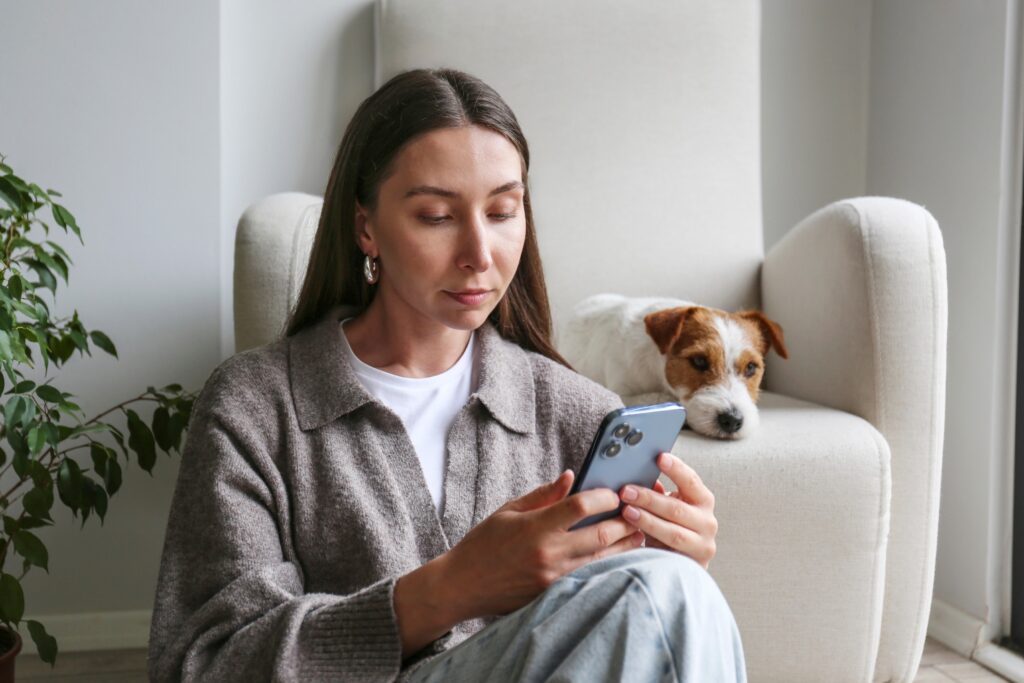
That endless scroll through your social media feed can feel harmless, even relaxing. But have you ever looked up from your phone and realized an hour has vanished? Or felt a pang of anxiety when you’re away from your notifications for too long? You’re not just imagining it; social media addiction is real. What starts as a simple way to connect with others can sometimes morph into something more demanding, affecting your mood, your focus, and your daily life. Let’s talk about what happens when social media use crosses a line and what you can do about it.
What is social media addiction?
Social media addiction is a type of behavioral addiction, meaning it involves a compulsive need to use social platforms, even when it causes harm to other parts of your life. It’s not just about spending a lot of time online; it’s about an uncontrollable urge that can interfere with work, school, and real-world relationships. Think of it less as a personal failing and more as a predictable response to a powerful design. Psychologists estimate that as many as 5% to 10% of Americans meet the criteria for social media addiction today.
So, why is social media so addictive? It’s engineered to be. Platforms tap into basic human psychology to keep you engaged. One major driver is the fear of missing out (FOMO), where seeing others’ curated lives creates anxiety that you’re being left behind. Another is social comparison, where you constantly measure your own life against the highlight reels of others, often leading to feelings of inadequacy. These platforms also provide a powerful source of validation.
Every like, comment, and share triggers a small sense of reward. It’s no surprise we get hooked when you consider that people talk about themselves about 80% of the time on social networking sites, compared to just 30-40% in real-world conversations. This constant self-focus and feedback loop is a powerful and often addictive combination. The stages of addiction often begin with this type of seemingly harmless, rewarding behavior.
How social media affects the brain
Every time you get a notification, a like, or a positive comment, your brain releases a small amount of dopamine, the “feel-good” chemical. This is the same chemical involved in other pleasurable activities, like eating good food or spending time with loved ones. Social media platforms create a powerful cycle of reward and reinforcement by providing these little dopamine hits. Your brain’s reward pathways are activated, making you want to repeat the behavior that led to the good feeling. Over time, this creates a habit that can be hard to break.
This process is remarkably similar to how the brain responds to addictive substances. Some experts have even called the smartphone a “modern-day hypodermic needle” because of how effectively it delivers these digital dopamine hits. Just as with other addictions, your brain can build a tolerance. The initial thrill of a few likes wears off, and you might find yourself needing more and more engagement, more posts, more notifications, more scrolling, to get that same sense of satisfaction.
This can lead to a “dopamine deficit state,” where you feel anxious, down, or empty when you’re not online. This isn’t just a feeling; it’s a neurological response to the brain becoming accustomed to constant, high levels of stimulation, making it harder to find pleasure in everyday, offline activities. To learn more about how different behaviors can impact the brain, you can explore information on addiction treatment and its underlying principles.
Recognizing a social media addiction
How do you know if your social media use has become a problem? It’s less about the exact number of hours you spend online and more about how that use affects your well-being. If you’re concerned, it can be helpful to look for specific signs. Many of these symptoms overlap with other behavioral addictions.
- Preoccupation with social media. You find yourself constantly thinking about social media, checking your phone first thing in the morning, or planning your next post.
- Withdrawal symptoms. You feel irritable, restless, or anxious when you can’t access your accounts. This feeling of being cut off can be deeply unsettling.
- Neglecting responsibilities. Your use of social media interferes with your performance at work or school, or you find yourself neglecting chores and other personal duties.
- Using it as an escape. You turn to social media to avoid dealing with negative feelings like loneliness, stress, or depression, using it as a way to numb out.
- Failed attempts to cut back. You’ve tried to reduce your time on social media but find yourself unable to stick to your goals.
- Losing interest in other activities. Hobbies and face-to-face interactions that you once enjoyed have taken a backseat to scrolling.
If these signs feel familiar, it may be time to talk to a professional. Help is available if you’re unsure if your social media usage is unhealthy.
The connection between social media and mental health problems
The link between heavy social media use and mental health issues is becoming increasingly clear. Individuals who spend excessive time on these platforms are more likely to report symptoms of anxiety and depression. The constant stream of curated, picture-perfect lives can fuel social comparison, leading to feelings of inadequacy, low self-esteem, and body image issues.
It’s easy to feel like your life doesn’t measure up when you’re only seeing everyone else’s highlights. Furthermore, long-term use of social media could negatively impact sleep quality, as the blue light from screens can disrupt natural sleep cycles. Poor sleep only exacerbates mental health problems, creating a difficult cycle to break. For those struggling with these co-occurring issues, specialized dual diagnosis treatment can provide integrated support.
At-risk youth
Teenagers and young adults are particularly vulnerable to the negative effects of social media. Their brains are still developing, especially the parts responsible for impulse control and social reward, making them more susceptible to its addictive design. According to the U.S. Surgeon General, up to 95% of young people aged 13-17 use a social media platform. Research shows that adolescents who spend more than three hours a day on social media face double the risk of experiencing poor mental health outcomes, including symptoms of depression and anxiety.
Beyond the impact on mental health, there’s an increased risk of exposure to cyberbullying and harmful content. The pressure to maintain a perfect online persona can be immense, and a single negative comment can feel devastating. This constant connectivity can also affect academic performance, as students addicted to social media are more likely to have lower grades than their peers.
How can you decrease social media use?
Reclaiming your time and attention from social media isn’t about eliminating it entirely but about using it more mindfully and intentionally. Building healthier digital habits can help you regain control and find a better balance. Here are a few practical steps you can take:
- Turn off non-essential notifications. The constant pings and buzzes are designed to pull you back in. By turning off notifications for everything except maybe direct messages from people you know, you get to decide when you check your social media apps, not the other way around.
- Set clear time limits. Many smartphones have built-in features that allow you to set daily time limits for specific social media sites. Decide on a reasonable amount of time, say, 30 minutes a day, and let your phone help you stick to it.
- Schedule “no-phone” periods. Designate certain times of the day as screen-free. This could be during meals, the first hour after you wake up, or the hour before you go to bed. This helps create space for other activities and improves sleep.
- Delete apps temporarily. If you find yourself mindlessly opening a particular app out of habit, try deleting it from your phone for a few days or a week. This “digital detox” can help you break the cycle and reassess its role in your life.
- Replace scrolling with offline hobbies. The urge to scroll often comes from boredom or a need for a mental break. Find alternative activities to fill that time, like reading a book, going for a walk, or working on a creative project. Creating new reward pathways in your brain is key to lasting change.
Frequently asked questions
Excessive social media use has been linked to mental health problems such as anxiety, depression, low self-esteem, negative body image, and poor mental health overall. Studies from institutions like Harvard University and findings published in the International Journal of Environmental Research and Public Health suggest that harmful social media use can negatively impact sleep quality, life satisfaction, emotional well-being, and real-life relationships, especially among young adults, teenage girls, high school students, and college students.
Because social media addiction is not officially classified in the Diagnostic and Statistical Manual, researchers rely on surveys and clinical tools to measure social media addiction and identify harmful social media patterns. Large national survey data assess factors like mood modification, conflict in interpersonal relationships, negative impact on academic performance, and overall mental well being, helping mental health professionals determine when excessive social media use crosses into problematic social media.
Treatment often involves cognitive behavioral therapy or cognitive behavior therapy to address addictive behaviors, improve coping skills, and reduce excessive social media habits. A mental health professional may also treat co-occurring mental health issues such as anxiety or depression and help individuals rebuild real life relationships, improve physical health and sleep quality, and restore balance between the online world and everyday life.
Support and treatment for social media addiction
Sometimes, self-help strategies aren’t enough to break the cycle, and that’s perfectly okay. When social media use begins to seriously impact your mental health and daily functioning, professional support can be incredibly effective. A mental health professional can help you understand the root causes of your compulsive behavior and develop personalized strategies for managing it.
One of the most proven methods for this is cognitive behavioral therapy (CBT). This approach helps you identify the negative thought patterns and beliefs that drive your social media use and replace them with healthier ones. It’s a practical, goal-oriented therapy that gives you tangible tools to change your behavior. Because social media addiction often co-occurs with conditions like anxiety and depression, it’s important to address them together. This is known as dual diagnosis treatment, an integrated approach that treats both the behavioral addiction and any underlying mental health conditions simultaneously.
At Red Ribbon Recovery, we provide access to this type of integrated care through accessible outpatient programs. We understand that life doesn’t stop for treatment, which is why we offer flexible options to fit your schedule. If you feel like your social media use is out of your control, we encourage you to reach out. A confidential and compassionate conversation is the first step toward finding a healthier balance. Contact us today.
Sources
- PubMed Central. (January 10, 2022). Heterogeneity of Prevalence of Social Media Addiction Across …. PubMed Central.
- Stanford Medicine. (October 29, 2021). Addictive potential of social media, explained. Stanford Medicine.
- Dartmouth Undergraduate Journal of Science. (August 20, 2022). Social Media, Dopamine, and Stress: Converging Pathways. Dartmouth College.
- PubMed Central. (November 17, 2022). The effects of smartphone notifications on cognitive control … – PMC. PubMed Central.
- SAMHSA. (June 9, 2023). National Helpline for Mental Health, Drug, Alcohol Issues – SAMHSA. SAMHSA.
- U.S. Department of Health and Human Services. (February 19, 2025). Social Media and Youth Mental Health |. HHS.gov.
- University of California San Francisco. (May 21, 2025). Yes, Social Media Might Be Making Kids Depressed – UCSF. UCSF.
- Columbia University Irving Medical Center. (June 18, 2025). Addictive Use of Social Media, Not Total Time, Associated with …. Columbia University.
- Utah Department of Human Services. (February 16, 2024). How does social media affect sleep?. Utah.gov.
- PubMed Central. (December 8, 2023). The Effects of Partaking in a Two-Week Social Media Digital Detox …. PubMed Central.
- PubMed Central. (December 5, 2022). The effect of mindfulness on online self-presentation, pressure, and …. PubMed Central.
- National Institute of Mental Health. (January 1, 2025). Finding Help for Co-Occurring Substance Use and Mental Disorders. NIMH.
- PubMed Central. (December 13, 2013). Treatment outcomes using CBT-IA with Internet-addicted patients. PubMed Central.
- PubMed Central. (October 27, 2024). Understanding Social Media Addiction: A Deep Dive – PMC. PubMed Central.