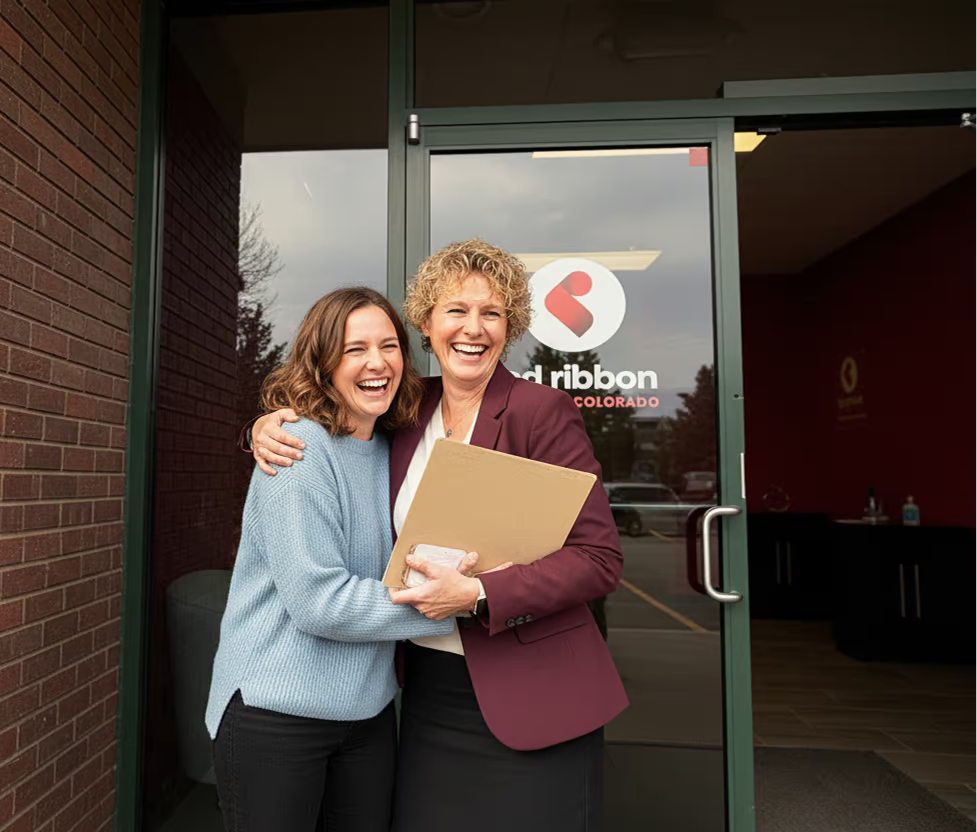
Opioid addiction is a progressive and potentially life-threatening condition that affects people from all walks of life. Whether it begins with a legitimate prescription for pain relief or through recreational use, finding accessible opioid treatment near me is essential because opioids can quickly lead to physical dependence and a powerful psychological grip.
Opioid addiction treatment in Colorado focuses on more than just getting through withdrawal. Effective opioid treatment programs address the physical, mental, and behavioral aspects of recovery. This can include medication assisted treatment (MAT), counseling, human services and other treatment services that support long-term recovery.
Opioid Rehab: What is an opioid?
Opioids are a class of drugs that act on specific receptors in the brain and spinal cord to reduce the perception of pain. They may be naturally derived from the opium poppy, semi-synthetic, or fully synthetic. In medical settings, opioids are commonly prescribed for moderate to severe pain following surgery or injury, and in some cases for managing chronic pain that has not responded to other treatments.
When opioids bind to these receptors, they block pain signals and stimulate the release of dopamine, a neurotransmitter associated with pleasure and reward. This dopamine release can produce a sense of euphoria, which increases the potential for repeated use and the development of physical dependence.
Examples of opioids include:
- Morphine
- Heroin
- Codeine
- Fentanyl
- Tramadol
- Oxycodone
- Hydrocodone
- Hydromorphone
- Oxymorphone
Although prescription opioids have important medical uses, prolonged use or misuse can lead to dependence, addiction, and overdose. Misuse includes taking higher doses than prescribed, using opioids more frequently than directed, or taking them without a prescription. Both prescription and illicit opioids carry these risks, particularly when combined with alcohol or other sedating substances.
Are opiates the same as opioids?
The terms “opiate” and “opioid” are often used as if they mean the same thing, but there is a key distinction. Opiates refer specifically to naturally occurring substances derived from the opium poppy, such as morphine, codeine, and heroin. Opioids is the broader category, which includes both natural opiates and synthetic or semi-synthetic drugs made in a laboratory.
This means all opiates are opioids, but not all opioids are opiates. For example, fentanyl is a fully synthetic opioid and does not come directly from the poppy plant. Many prescription pain medications, sometimes called opioid analgesics, may be natural, semi-synthetic, or synthetic, but all fall under the opioid classification.

You can overcome addiction. Reach out to discover:
What is opioid addiction?
Opioid addiction, also called opioid use disorder, can develop after short-term or long-term use of opioid medications or illicit opioids. Opioids are highly addictive because they activate powerful reward centers in the brain. They trigger the release of endorphins, which reduce pain and create a sense of well-being. This effect is short-lived, and when the drug wears off, many people want to regain those good feelings as quickly as possible.
Repeated opioid use changes how the brain works. Over time, the body produces fewer natural endorphins, leading to tolerance, where the same dose no longer has the same effect. People may start taking higher doses to feel relief or to avoid symptoms such as anxiety, muscle aches, sweating, and worsening pain.
Misuse, such as taking more than prescribed, using opioids more often than directed, or altering them to snort or inject, greatly increases the risk of addiction and overdose. Using opioids for more than a few days also raises the chance of long-term dependence, with research showing that even five days of use can increase the likelihood of still taking them a year later.
Certain factors make opioid addiction more likely. These include being younger, having a personal or family history of substance misuse, living with depression, anxiety, or post-traumatic stress disorder, experiencing past trauma, and engaging in risky behaviors. Women may also be at greater risk because they are more often prescribed opioids, given higher doses, and may use them for longer periods due to chronic pain conditions.
Opioid addiction can develop quickly or over many years, but once it takes hold, professional opioid treatment programs are often needed to stop safely and manage withdrawal. Preventing addiction starts with using the lowest effective dose for the shortest possible time, exploring non-opioid pain treatments, and never using medication that was not prescribed to you.
Signs of opioid addiction
Knowing the signs of opioid addiction can help you or someone you care about get help sooner. While only a qualified healthcare provider can diagnose opioid use disorder, certain behaviors and symptoms may indicate a problem.
Possible signs include:
- Using opioids in larger amounts or for longer periods than intended
- Unsuccessful attempts to cut down or stop
- Spending a lot of time obtaining, using, or recovering from opioid use
- Strong cravings or urges to use
- Missing work, school, or family responsibilities due to drug use
- Continuing to use despite relationship or social problems
- Giving up activities that were once important or enjoyable
- Using opioids in risky situations, such as while driving
- Continuing to use despite physical or mental health problems caused by opioids
- Developing tolerance, meaning more of the drug is needed to get the same effect
- Experiencing withdrawal when use is reduced or stopped
Anyone showing several of these signs may be at risk for opioid addiction and should seek a professional evaluation.
How to recognize opioid substance abuse
Opioid abuse can affect anyone, regardless of age, background, or circumstances. Often, the first people to notice a problem are family members, friends, or co-workers who see changes in behavior, mood, or appearance. Early recognition can make it easier to get help before the situation becomes more severe, allowing families to connect with leading opioid treatment centers that offer immediate intervention.
Common signs of opioid abuse include:
- Pinpoint pupils
- Drowsiness or nodding off at unusual times
- Slurred speech
- Unexplained weight loss or changes in appetite
- Neglecting personal hygiene
- Flu-like symptoms such as nausea, vomiting, or sweating
- Social withdrawal or isolation
- Loss of interest in activities that were once important
- Secretive behavior or lying about whereabouts
- Financial problems or missing valuables or medications
- Drug paraphernalia such as syringes, burnt spoons, bottle caps, or small plastic bags
Mood changes can also occur, such as irritability, sudden euphoria, or periods of depression. In severe cases, opioid abuse can lead to an opioid overdose, which is a medical emergency and requires immediate care, often in an emergency department.
A professional evaluation from a Colorado rehab center can determine whether an opioid use disorder is present and connect the individual with appropriate opioid treatment programs through a qualified treatment center or local Colorado treatment services.
WE ARE AVAILABLE 24/7
Request a call for answers and help.
If you or someone you care about is struggling with addiction or mental health problems, request a call to speak with a knowledgeable treatment specialist. Our team is here to help you understand your options for care. There is no cost or obligation to enter treatment by requesting a call.
"*" indicates required fields
Opioid addiction treatment options in Colorado
Opioid addiction treatment in Colorado is designed to address the complex challenges that come with long-term substance use. Effective opioid treatment programs focus on more than just managing substance use symptoms. It also includes therapeutic offerings, support for family members, and access to medication assisted treatment (MAT) and other health care services when appropriate. At a specialized opiate rehab center, treatment addresses physical health, mental well-being, and co-occurring conditions while providing the necessary tools to prevent relapse.
Across the state, those searching for opioid addiction treatment near me will find services available in multiple settings, ranging from inpatient centers to flexible outpatient care. These range from inpatient treatment center programs that offer 24-hour care to outpatient options that allow people to continue working or caring for their families while receiving support. The recovery journey often involves working closely with a care team that may include physicians, nurse practitioners, and physician assistants who follow best practices from the National Institute on Drug Abuse, the Substance Abuse and Mental Health Services Administration and other public health agencies.
Colorado’s response to the opioid crisis has included collaborative efforts like the Colorado Consortium for Prescription Drug Abuse Prevention. These initiatives aim to reduce overdose deaths, expand access to evidence-based treatment, and connect people to human services and additional resources in their community.
Opioid detox
For many people entering opioid addiction treatment, the first step is medical detox. Detox provides a safe, structured environment where withdrawal from opioids can be managed under professional supervision. This process is especially important for those who have been using opioids for a long period, whether from prescription drugs or illicit sources.
A specialized opioid detox program typically includes three phases: evaluation, stabilization, and transition to ongoing care, ensuring each patient is physically prepared for the next steps of recovery. During the evaluation, the care team reviews the person’s substance use history, current health status, mental health needs, and any co-occurring conditions. This information helps the clinical staff develop a detox plan that is both safe and effective.
In the stabilization phase, withdrawal symptoms are closely monitored and treated as needed. Symptoms can range from muscle aches and nausea to severe anxiety and insomnia. In some cases, medication assisted treatment (MAT)—including buprenorphine treatment or methadone treatment—is introduced during detox to reduce cravings and ease discomfort. Medication assisted treatment (MAT) uses FDA-approved medications in combination with counseling, behavioral health services and additional resources to support stability and prepare the person for the next stage of treatment. Treatment centers may also offer harm reduction services, provider training, and additional resources for different patient populations, including pregnant women and community members at risk of opioid overdose.
Medical detox and medication assisted treatment (MAT) are not standalone solutions for opioid addiction. The goal is to help patients safely complete withdrawal and then transition into comprehensive opioid treatment programs that may include therapies, individual counseling, group sessions, family involvement and additional resources. Successful detox is often followed by treatment in a treatment center, either in an inpatient or outpatient setting, where the focus shifts to long-term recovery and relapse prevention.
Addiction medicine: medication-assisted treatment
Medication-assisted treatment (MAT) is widely recognized as one of the most effective strategies for treating opioid addiction. MAT combines medications with counseling and behavioral health services, allowing treatment providers to address both the physical dependence and the psychological factors that keep substance use disorders going.
MAT can be introduced during medical detox to ease the discomfort of withdrawal or used as part of a long-term maintenance plan. In both cases, it is typically paired with therapies such as cognitive behavioral therapy (CBT), motivational interviewing, or contingency management. These approaches help patients learn how to manage triggers, build coping skills, and maintain progress through each stage of their recovery journey.
Medications commonly used in MAT include:
- Buprenorphine. Reduces withdrawal symptoms and cravings while blocking the effects of other opioids.
- Methadone. Decreases cravings, eases withdrawal, and helps stabilize brain chemistry for those who are physically dependent.
- Naltrexone. Blocks the euphoric effects of opioids and may help reduce cravings over time.
MAT is not a one-size-fits-all approach. The choice of medication, dosage, and length of treatment depends on the patient’s health history, treatment goals, and response to therapy. For some, MAT is a short-term bridge through detox. For others, it remains an important part of ongoing care within an opioid treatment program.
Expanding access to MAT is a public health priority in Colorado. Programs supported by the Colorado Department of Public Health and Environment, and other community partnerships aim to reduce overdose deaths and connect patients to comprehensive addiction care. These efforts often include provider education, pilot programs to reach rural treatment locations, and training for nurse practitioners and physician assistants to prescribe buprenorphine in office-based opioid treatment settings.
MAT can also be a safe and effective option for opioid dependent pregnant women when managed by experienced clinicians. In these cases, it supports maternal health while reducing the risks associated with untreated opioid addiction and protecting the health of the developing baby.
Behavioral health and mental health services
Behavioral health and mental health services are essential parts of any effective opioid addiction treatment plan. While medication-assisted treatment (MAT) can help manage withdrawal and cravings, therapy addresses the underlying behaviors, thought patterns, and life circumstances that contribute to substance use disorders.
Therapies can take place in individual, group, or family settings. Individual counseling gives patients a private space to work one-on-one with a treatment provider on personal challenges, triggers, and coping strategies. Group therapy brings people with shared experiences together to build peer support, share progress, and learn from each other’s recovery journeys. Family therapy can help repair relationships, improve communication, and engage loved ones in the recovery process.
Common approaches used in opioid addiction treatment include:
- Cognitive behavioral therapy (CBT). Helps patients identify and change unhelpful thinking patterns and behaviors.
- Motivational interviewing (MI). Encourages commitment to positive change by exploring personal goals and motivations.
- Contingency management (CM). Uses structured rewards to reinforce healthy behaviors, such as attending appointments or maintaining sobriety.
Behavioral health services often work hand-in-hand with mental health services for patients with co-occurring conditions like depression, anxiety, or post-traumatic stress disorder. Addressing both mental health needs and substance use at the same time can improve treatment outcomes and lower the risk of relapse.
Colorado opioid treatment programs frequently integrate counseling into every stage of care, from inpatient and residential settings to outpatient and office-based opioid treatment settings. This ensures patients have consistent support, access to additional resources, and the opportunity to build lasting skills for recovery.
Residential treatment programs/ inpatient treatment programs
Residential and inpatient programs provide 24-hour care in a structured environment. This setting is designed for people who need intensive support, a break from daily triggers, or help managing severe withdrawal and cravings.
During inpatient opioid treatment programs, patients live at the treatment center and follow a daily schedule that can include individual counseling, group therapy, education on addiction, relapse prevention training, and support for co-occurring mental health conditions. The goal is to create a safe, stable space where recovery can become the main focus.
This level of care within our opioid treatment programs is often recommended after medical detox or for individuals with a history of relapse, unstable living situations, or significant physical or mental health concerns.
Outpatient treatment options
Outpatient treatment offers structured support for recovery while allowing people to live at home and maintain work, school, or family responsibilities. Services are provided through scheduled appointments at a treatment center, clinic, or other outpatient facility. While the focus remains on evidence-based therapies and peer support, the level of time commitment can vary depending on individual needs.
Partial hospitalization program (PHP)
Often called “day treatment,” PHP is the most intensive form of outpatient opioid addiction rehab, typically involving about five days of treatment each week, totaling 20 hours or more.. The schedule often includes individual and group therapy, education about substance use, and relapse prevention skills. At the end of each day, participants return home or to a sober living environment.
Intensive outpatient program (IOP)
Our opioid rehab center offers IOP as a step down from PHP, providing fewer required hours while maintaining the consistent structure and support necessary for long-term recovery. Most IOP schedules include three to five days of programming per week, adding up to at least nine hours. Sessions focus on therapy, coping skills, and maintaining progress in recovery while balancing work, school, or family commitments.
Standard outpatient program (OP)
Standard outpatient care is the least intensive option, typically meeting once or twice a week. It can be a good choice for people with a stable support system and lower risk of relapse, or as a follow-up to more intensive treatment. This level of care focuses on continued counseling, recovery check-ins, and strategies for maintaining sobriety long term.
Free Insurance Check
Our rehab center accepts most insurance plans.
Check if your insurance will cover the cost of treatment by filling out our confidential insurance form. We accept most insurance plans.

The opioid epidemic and increase in drug overdose deaths
The United States continues to face a devastating opioid epidemic, with tens of thousands of lives lost each year to drug overdoses. This public health crisis took root in the 1990s, when a sharp increase in opioid prescriptions, driven by aggressive pharmaceutical marketing, misrepresented these drugs as safe and non-addictive. Many healthcare providers were led to believe that opioids were a low-risk solution for managing pain.
As the dangers of opioid addiction became more widely recognized, stricter guidelines led to the rise of specialized treatment centers for opioid addiction to help those who had previously been prescribed these high-risk medications. Unfortunately, this shift led many individuals to seek out cheaper and more accessible alternatives, most notably heroin and illicitly manufactured fentanyl, both of which are highly potent and dangerous.
Today, the need for comprehensive opioid treatment programs has never been more urgent. According to the Substance Abuse and Mental Health Services Administration (SAMHSA), effective opioid addiction treatment requires a comprehensive approach that includes medication-assisted treatment (MAT), behavioral therapies, and mental health support.
At Red Ribbon Recovery Colorado, we align with the Substance Abuse and Mental Health Services Administration’s evidence-based standards to provide integrated care that not only addresses opioid dependence but also treats the underlying mental health challenges that often accompany addiction. Recovery is possible with the proper support, treatment, and care.
When to consider an opioid treatment program
Opioid use disorder can affect anyone, whether opioids were first prescribed as pain relievers or taken for nonmedical reasons. Signs that it may be time to enter an opioid treatment program include:
- Intense opioid cravings
- Increased tolerance
- Withdrawal, either physical or psychological
- Neglecting critical responsibilities due to drug use
- Repeated attempts to quit without treatment
- Feeling preoccupied with drug use
- Engaging in compulsive behaviors to continue using drugs, like stealing or borrowing money
Getting professional opioid use disorder treatment from a qualified health care provider at a treatment center can make all the difference in your substance use recovery journey.
Rehab might feel like a big step, but remember why you're here—you’re looking for a way forward. We can help.
Get opioid treatment in Colorado at Red Ribbon Recovery
At Red Ribbon Recovery Colorado, our opioid treatment programs includes a range of care options to meet each clients unique needs. We believe that everyone should have access to substance use disorder card regardless of their financial situation which is why we accept most major health insurance plans.
Our team of healthcare experts works closely with community partners, such as sober living programs, to create comprehensive plans for addiction treatment and recovery support. Recovery doesn’t end with treatment; it starts with it. Let Red Ribbon Recovery Colorado be your partner in building a life free from addiction. Contact us today to start your recovery journey.
We are here to help you or a loved one find addiction treatment near you.
Admitting you have a substance abuse problem and asking for help is not always easy. If you or a loved one are struggling with drug addiction, alcohol addiction or another substance use disorder, help is available. Call SAMHSA’s National Helpline at (303) 219-3980 to learn about resources in your area or reach out to our team for personalized treatment.
Treatment Center Reviews
Bridget LaRocco
I have been to this facility twice now, for Laser Hair removal and Botox. I saw Kim 2 times now for laser and she has been great, she made me feel really comfortable and…
Bridget LaRocco
I have been to this facility twice now, for Laser Hair removal and Botox. I saw Kim 2 times now for laser and she has been great, she made me feel really comfortable and…
Bridget LaRocco
I have been to this facility twice now, for Laser Hair removal and Botox. I saw Kim 2 times now for laser and she has been great, she made me feel really comfortable and…
Sources
- MedlinePlus. (2020). Opioid misuse and addiction treatment.
- MedlinePlus. (2021). Prescription drug misuse.
- Substance Abuse and Mental Health Services Administration (SAMHSA). (2021). Medications for opioid use disorder. Treatment Improvement Protocol (TIP) Series 63.
- Substance Abuse and Mental Health Services Administration (SAMHSA). (2022). SAMHSA’s national helpline.
- National Institute on Drug Abuse. (January 2022). Naloxone drugfacts.
- National Institute on Drug Abuse. (June 2021). Prescription opioids drugfacts.
- National Institute on Drug Abuse. (2018). Types of treatment programs.
- U.S. Food and Drug Administration. (2019). Information about medication-assisted treatment (MAT).
- Shah, M., et al. (2021). Opioid withdrawal. StatPearls.
- Abraham, A. J., Andrews, C. M., Grogan, C. M., D’Aunno, T., Humphreys, K. N., Pollack, H. A., & Friedmann, P. D. (2017). The Affordable Care Act transformation of substance use disorder treatment. American Journal of Public Health, 107(1), 31–32. https://doi.org/10.2105/AJPH.2016.303558
- Braude, L., Daniels, A. S., Delphin-Rittmon, M. E., Dougherty, R. H., Ghose, S. S., & Lyman, D. R. (2014). Substance abuse intensive outpatient programs: Assessing the evidence. Psychiatric Services, 65(6), 718–726. https://doi.org/10.1176/appi.ps.201300249
- Abrantes, A. M., Blevins, C. E., Kurth, M. E., Gordon, A. L., & Stein, M. D. (2017). Alcohol treatment outcomes following discharge from a partial hospital program. Journal of Substance Use, 22(6), 643–647. https://doi.org/10.1080/14659891.2016.1271036
- American Psychiatric Association. (2013). Diagnostic and statistical manual of mental disorders (5th ed.). Arlington, VA: American Psychiatric Publishing. https://dsm.psychiatryonline.org.
- Vahia, V. N. (2013). Diagnostic and statistical manual of mental disorders 5: A quick glance. Indian Journal of Psychiatry, 55(3), 220–223. https://doi.org/10.4103/0019-5545.117131
About the content
Written by: Carli Simmonds. Carli Simmonds holds a Master of Arts in Community Health Psychology from Northeastern University. From a young age, she witnessed the challenges her community faced with substance abuse, addiction, and mental health challenges, inspiring her dedication to the field.

Medical reviewed by: Jodi Tarantino, LICSW. Jodi Tarantino is an experienced, licensed Independent Clinical Social Worker (LICSW) and Program Director with over 20 years of experience in Behavioral Healthcare. Also reviewed by the RRR Editorial team.
Red Ribbon Recovery is committed to delivering transparent, up-to-date, and medically accurate information. All content is carefully written and reviewed by experienced professionals to ensure clarity and reliability. During the editorial and medical review process, our team fact-checks information using reputable sources. Our goal is to create content that is informative, easy to understand and helpful to our visitors.